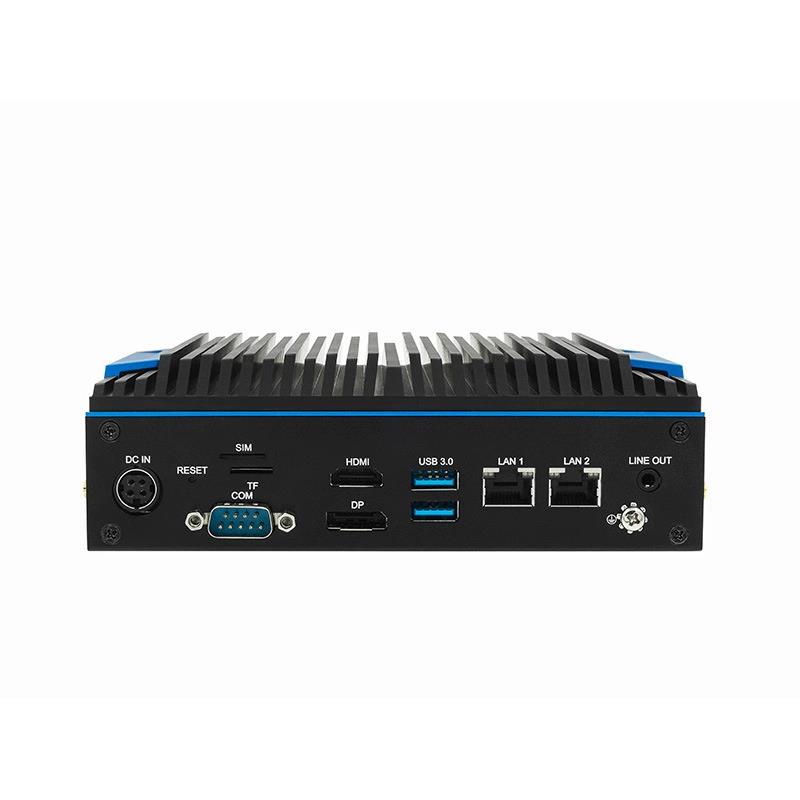
Use C5 BOX for project-defined RTSP analytics, event filtering and alarm integration after validating stream count, codec, model and latency requirements.
Detailed application directions built around one configurable C5 BOX platform.
RTSP/IP cameras
Video source
Dual Gigabit Ethernet
Networking
MQTT / Webhook / VMS
Event output
6 TOPS NPU
AI engine
Why this application is difficult
Design for the real deployment, not only the demo.
Each page separates the hardware foundation from project-specific software, environmental, security and acceptance requirements.
01
Stream count is not a single number
Codec, bitrate, resolution, frame rate, decoding path and model load all change capacity.
02
Cameras fail in real deployments
Packet loss, restarts, time drift and credential changes need controlled recovery.
03
Raw video is expensive to move
Local event extraction can reduce uplink traffic, storage and cloud processing.
04
Alarm quality matters more than demos
Rules, dwell time, object tracking and human review determine operational usefulness.
Reference architecture
A clear path from source to business outcome.
Interfaces and responsibilities are frozen during feasibility review and verified with the target equipment.
CAMERAS
IP video sources
Defined codec, resolution, bitrate, frame rate and credentials.
NETWORK
Switch and LAN split
Camera-side traffic separated from management traffic.
EDGE ANALYTICS
C5 B0X
Decode, sample, infer, track, apply rules and buffer events.
OPERATIONS
VMS or alarm platform
Events, snapshots, metadata, health and operator workflow.
Detailed capabilities
What the solution must do.
C5 BOX supplies compute and I/O. The complete solution includes project software, configuration, documentation and evidence.
RTSP management
Connect defined streams, monitor health and implement reconnect backoff and credential handling.
Inference scheduling
Allocate decoding and inference resources by stream, model and event priority.
Event rules
Apply zones, dwell time, direction, count or state logic after model output.
Efficient reporting
Send structured metadata and selected snapshots rather than every frame.
System health
Track stream uptime, queue depth, model status, storage and temperature.
Deployment method
Move from requirements to a repeatable rollout.
Use gated engineering steps so that performance, responsibility and support boundaries are visible before production.
01
Camera survey
Record codec, bitrate, frame rate, time source, network and VMS requirements.
02
Load profile
Define a four-stream base case and any eight-stream reduced-FPS case.
03
Rule design
Specify object classes, zones, tracking, dwell time and alarm suppression.
04
Integration
Connect MQTT, Webhook or the target VMS and validate retries and acknowledgements.
05
Stress test
Run 72 hours with stream drops, switch restarts and storage pressure.
PoC and acceptance
Evidence to collect before production.
Acceptance criteria should be written into the PoC plan and measured under representative load and failure conditions.
Video profile
Exact stream count, codec, resolution, bitrate and target FPS.
AI profile
Model, input size, inference frequency and concurrent throughput.
Latency
End-to-end time from camera frame to acknowledged alarm.
Recovery
Reconnect behavior during packet loss, camera reboot and switch restart.
Storage
Buffer sizing, retention, write endurance and full-disk behavior.
Soak test
72-hour stress report with CPU/NPU/memory load and thermal data.
Solution boundary
Do not market an absolute ‘8-channel AI’ capability without a workload-specific report. A valid claim must identify the codec, bitrate, frame sampling, model, input size and environmental conditions.
Recommended starting configuration
C5-BOX
Finalize the SKU only after the interfaces, workload, environment, software scope and certification route are known.