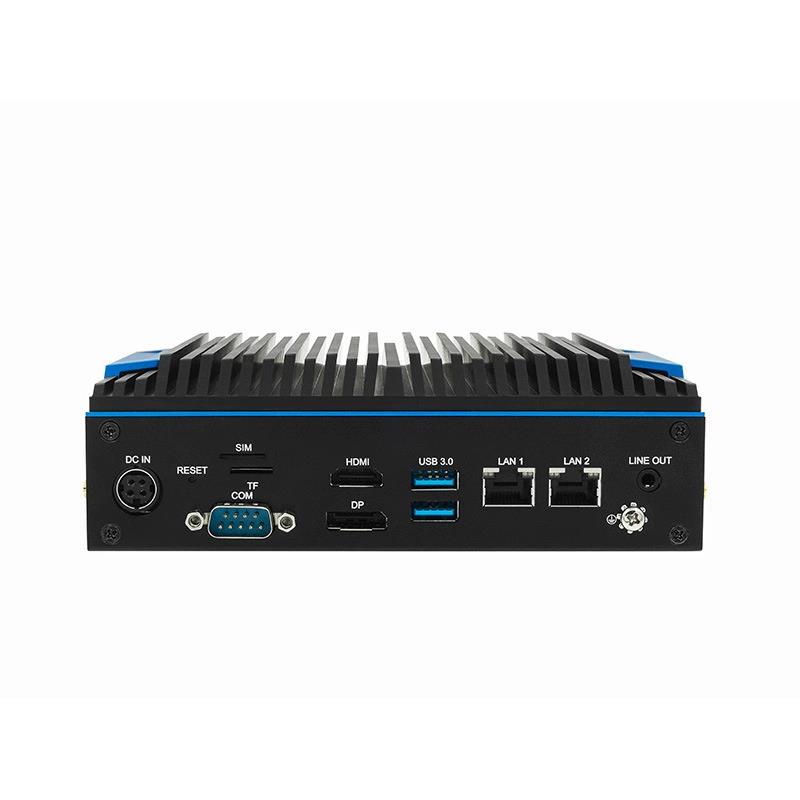
Detailed application directions built around one configurable C5 BOX platform.
2 x Gigabit Ethernet
Networks
Serial + GPIO
Control
HDMI + DP
Display
Indoor controlled sites
Deployment
Why this application is difficult
Design for the real deployment, not only the demo.
Each page separates the hardware foundation from project-specific software, environmental, security and acceptance requirements.
01
Existing systems use mixed protocols
Access control, gates, cameras and sensors may come from different vendors and generations.
02
Local autonomy is required
Entrances need defined behavior during platform or WAN outages.
03
Video and control have different risk
Network paths, permissions and audit logs should be separated and explicit.
04
Privacy is part of the architecture
Purpose, legal basis, retention, access and operator review must be designed.
Reference architecture
A clear path from source to business outcome.
Interfaces and responsibilities are frozen during feasibility review and verified with the target equipment.
SITE DEVICES
Cameras, access, gates
Defined protocols, credentials, wiring and local control points.
EDGE NODE
C5 BOX
Events, correlation, local rules, display and device services.
LOCAL RESPONSE
Access and notification
Gate, door, light, display or operator workflow.
PLATFORM
Campus system
Events, audit, health, configuration and incident handling.
Detailed capabilities
What the solution must do.
C5 BOX supplies compute and I/O. The complete solution includes project software, configuration, documentation and evidence.
Device aggregation
Connect project-approved cameras, serial devices, GPIO and IP systems.
Event correlation
Associate access, sensor and video events by time, location and rule.
Local autonomy
Maintain defined allow, deny, queue or notify behavior during upstream outages.
Network separation
Use dual Ethernet for a controlled video/device network and management uplink.
Auditability
Log rule decisions, operator actions, device health and configuration changes.
Deployment method
Move from requirements to a repeatable rollout.
Use gated engineering steps so that performance, responsibility and support boundaries are visible before production.
01
Site scope
Start with one entrance, parking area, warehouse or office building.
02
Protocol map
Document each device, owner, protocol, credential and control authority.
03
Rule design
Define event correlation, local autonomy, escalation and permission boundaries.
04
Integration test
Simulate device loss, WAN outage, restart and unauthorized commands.
05
Privacy review
Approve camera purpose, notices, retention, access and incident workflow.
PoC and acceptance
Evidence to collect before production.
Acceptance criteria should be written into the PoC plan and measured under representative load and failure conditions.
Compatibility
Approved device and protocol matrix with firmware versions.
Network
Routing, firewall, throughput and failure behavior across both LANs.
Autonomy
Documented local behavior during platform and WAN outages.
Control safety
Command authorization, timeout and fail-safe state for doors or gates.
Privacy
Purpose, access, retention, signage and review responsibilities.
Soak test
72-hour site test including disconnects and restart scenarios.
Solution boundary
Begin with a bounded site deployment. City-scale integration, facial recognition, public-space surveillance and safety-critical access control require additional legal, cybersecurity and reliability assessment.
Recommended starting configuration
C5-BOX
Finalize the SKU only after the interfaces, workload, environment, software scope and certification route are known.