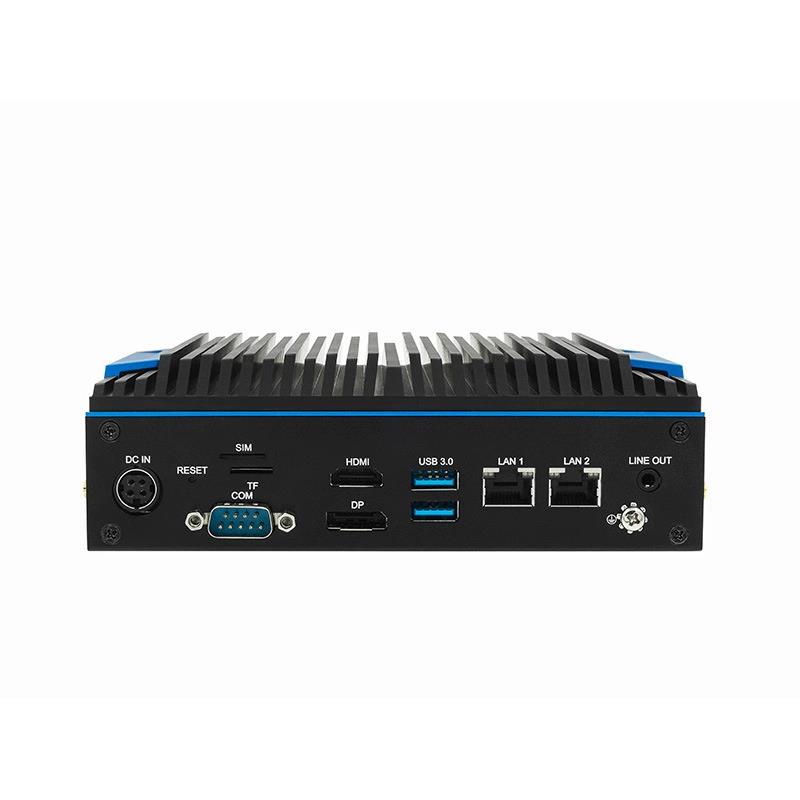
Detailed application directions built around one configurable C5 BOX platform.
Auxiliary warning layer
Role
IP or USB cameras
Inputs
GPIO / serial / network
Linkage
Local processing
Data
Why this application is difficult
Design for the real deployment, not only the demo.
Each page separates the hardware foundation from project-specific software, environmental, security and acceptance requirements.
01
Safety scenes are visually difficult
Occlusion, distance, lighting, PPE variation and crowded scenes change detection quality.
02
An alarm must lead somewhere
Human review, acknowledgement, escalation and closure are part of the solution.
03
False alarms cause fatigue
Rules, confidence, persistence and schedules need tuning with site data.
04
AI is not a safety controller
The system must not replace certified interlocks or mandated safety procedures.
Reference architecture
A clear path from source to business outcome.
Interfaces and responsibilities are frozen during feasibility review and verified with the target equipment.
SOURCES
Cameras and sensors
Defined zones, viewpoints, lighting and event classes.
LOCAL AI
C5 BOX
Inference, tracking, persistence rules and evidence capture.
LINKAGE
Alarm and PLC
GPIO, serial, MQTT or Webhook for project-defined actions.
WORKFLOW
EHS platform
Human review, acknowledgement, escalation and closure.
Detailed capabilities
What the solution must do.
C5 BOX supplies compute and I/O. The complete solution includes project software, configuration, documentation and evidence.
PPE detection
Detect selected helmet, vest or other classes only after site-specific sample validation.
Zone analytics
Apply polygon zones, direction, dwell time and schedule rules.
Evidence capture
Store the event time, camera, rule, snapshot and handling status.
Alarm linkage
Trigger a defined local or network action with rate limiting and acknowledgement.
Privacy controls
Minimize raw video transfer and apply role-based access and retention rules.
Deployment method
Move from requirements to a repeatable rollout.
Use gated engineering steps so that performance, responsibility and support boundaries are visible before production.
01
Risk mapping
Define events, zones, response owners and non-AI controls.
02
Camera review
Verify viewpoint, pixels on target, lighting, occlusion and time synchronization.
03
Model baseline
Measure precision, recall and false alarms across representative shifts.
04
Workflow integration
Connect alarms to review, acknowledgement, escalation and audit.
05
Controlled pilot
Run without automatic safety control until evidence and responsibility are approved.
PoC and acceptance
Evidence to collect before production.
Acceptance criteria should be written into the PoC plan and measured under representative load and failure conditions.
Dataset
Representative site, season, shift, PPE, distance and occlusion coverage.
Detection quality
Precision, recall, miss rate and alarms per camera-hour.
Latency
Event persistence plus end-to-end notification time.
Operations
Review, acknowledgement, escalation and closure are auditable.
Fail state
Defined behavior for camera loss, model failure, storage full and network outage.
Liability
Written statement that AI is an auxiliary warning layer only.
Solution boundary
This solution is not a certified safety system and must not replace safety PLCs, interlocks, guards, emergency stops, trained personnel or legally required procedures.
Recommended starting configuration
C5-BOX
Finalize the SKU only after the interfaces, workload, environment, software scope and certification route are known.