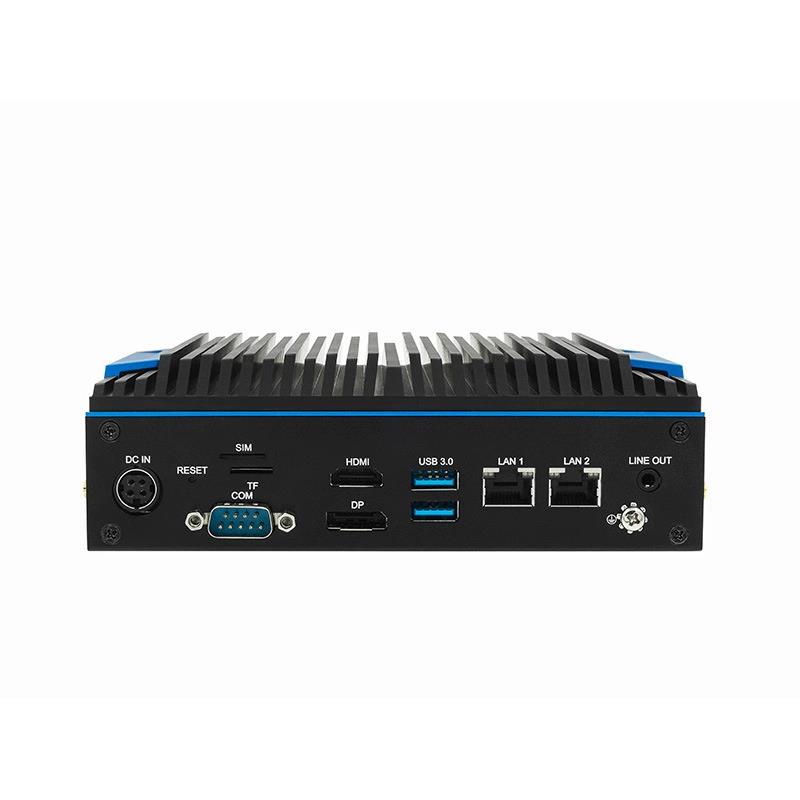
Detailed application directions built around one configurable C5 BOX platform.
RK3588 + 6 TOPS
Platform
Android and Linux
Systems
BSP, app and branding
Customization
NRE + volume hardware
Commercial model
Why this application is difficult
Design for the real deployment, not only the demo.
Each page separates the hardware foundation from project-specific software, environmental, security and acceptance requirements.
01
Prototype boards do not equal products
Cables, enclosure, recovery, supply continuity and support become critical after the demo.
02
Model deployment needs engineering
Conversion, operators, quantization, memory and performance must be validated on the target image.
03
Customization can destroy margin
Every change needs a defined boundary, NRE, owner, validation plan and change-control process.
04
Customers expect a lifecycle
Firmware, security fixes, component changes, RMA and replacement planning need written policies.
Reference architecture
A clear path from source to business outcome.
Interfaces and responsibilities are frozen during feasibility review and verified with the target equipment.
CUSTOMER IP
Model and application
Algorithm, UI, workflow, license and business logic.
BASE PLATFORM
C5 BOX
Standard hardware, interfaces, enclosure and selected OS.
ADAPTATION
BSP and integration
Model conversion, drivers, app packaging, branding and diagnostics.
CUSTOMER PRODUCT
Validated SKU
Frozen configuration, production test, support and change control.
Detailed capabilities
What the solution must do.
C5 BOX supplies compute and I/O. The complete solution includes project software, configuration, documentation and evidence.
Model adaptation
RKNN conversion, operator review, quantization and benchmark reporting for agreed models.
Application packaging
Pre-install services, UI, licensing, configuration and local data paths.
Branding
Product label, boot visuals and approved external branding within the agreed scope.
Device operations
Unique identity, logging, signed updates, rollback and remote diagnostics where implemented.
Supply governance
Frozen BOM, approved substitutions, PCN process, production test and RMA flow.
Deployment method
Move from requirements to a repeatable rollout.
Use gated engineering steps so that performance, responsibility and support boundaries are visible before production.
01
Feasibility
Review model, interfaces, system, security, certifications, quantity and launch region.
02
Engineering sample
Deliver a documented build with benchmark and known limitations.
03
Customer validation
Run acceptance tests in the target workflow and close blocking defects.
04
Pilot production
Freeze BOM, image, test procedure, labeling and packaging.
05
Lifecycle
Operate change control, updates, support, RMA and forecast planning.
PoC and acceptance
Evidence to collect before production.
Acceptance criteria should be written into the PoC plan and measured under representative load and failure conditions.
Algorithm
Compatibility, accuracy, FPS, P95 latency and resource usage.
Delivery boundary
Clear ownership for BSP, application, drivers, cloud and customer IP.
Security
Credentials, signing, update authority, SBOM and vulnerability handling.
Commercial
MOQ, NRE, forecast, lead time, payment and change-control terms.
Production
Golden image, serial-number process, test fixture and acceptance record.
Lifecycle
Support period, update cadence, PCN, RMA and last-time-buy process.
Solution boundary
Board, enclosure and interface changes are feasibility items, not default capabilities. Quote customization only after scope, ownership, validation, certification and volume are agreed.
Recommended starting configuration
C5-BOX
Finalize the SKU only after the interfaces, workload, environment, software scope and certification route are known.